
Travelling with your Pet Overseas
Pet Travel Information
If you are travelling from Great Britain to the EU with your dog, cat or ferret, you will need an Animal Health Certificate (AHC) issued by an Official Veterinarian before travel.
For travel to countries outside the EU and Northern Ireland, or with species other than dogs, cats or ferrets, owners should check the latest import requirements as early as possible at APHA (www.gov.uk/export-health-certificates or 03000 200 301), as these may affect the timing of vaccinations, parasite treatments and other health preparations.

Extended Stays Abroad
If you are staying abroad for an extended period, check the local requirements for pets in your destination country before you travel. Some countries require more frequent rabies vaccinations or have additional rules for pets living there, so it is important to ensure your pet continues to meet local regulations.
Microchipping
Your pet must be microchipped before it receives a rabies vaccination for pet travel. The microchip number must be recorded on the Animal Health Certificate (AHC).*
Rabies Vaccination
A rabies vaccination must be given by a vet (from 12 weeks of age) and your pet must wait 21 days after the rabies vaccination before travelling. There is no waiting period after a rabies booster, provided it is given within the validity period of the previous dose.**
Animal Health Certificates
You must take your pet to an Official Veterinarian (OV) no more than 10 days before entering the EU (or before departure if travelling by sea) to obtain an Animal Health Certificate (AHC).***
Tapeworm Treatment
Dogs travelling to Northern Ireland, the Republic of Ireland, Finland, Norway or Malta must receive a tapeworm treatment from a vet between 24 and 120 hours before entry. The treatment must be recorded on the Animal Health Certificate (AHC).
Arriving in the EU
On arrival in the EU, you will be required to enter through a Travellers’ Point of Entry (TPE) and present your Animal Health Certificate (AHC). You should be prepared to provide proof of your pet’s microchip and rabies vaccination if requested. If someone other than the owner is travelling with the pet, they must have written authorisation from the owner. The pet must travel within five days of the owner’s travel.
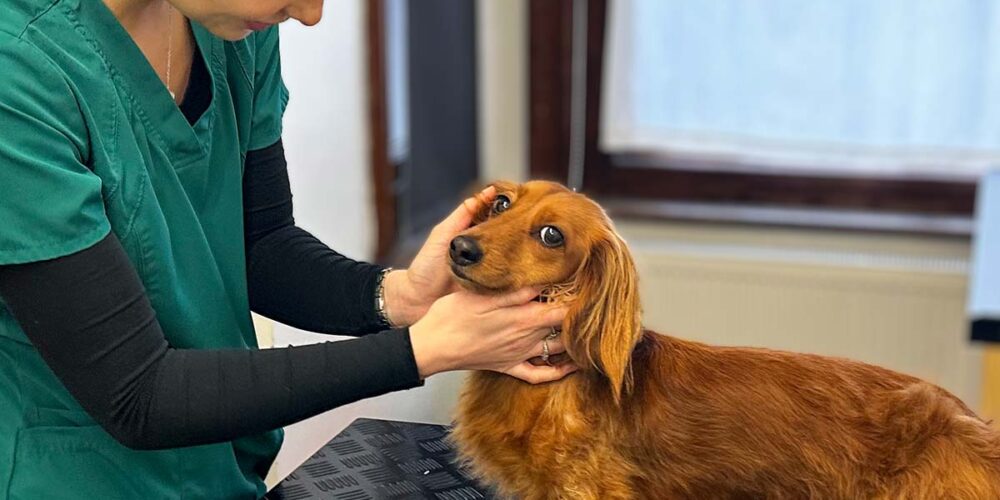
Preparing for pet travel
*Your pet’s microchip should be checked before you travel. It is the owner’s responsibility to ensure that the microchip is working correctly. Your vet or veterinary nurse can check your pet’s microchip for you.
**Although we endeavour to send reminders for rabies vaccine boosters, it is the owner’s responsibility to ensure that boosters are given before the current ‘valid until’ date. If a booster is given after this date, your pet must wait a further 21 days before it can travel.
Please contact us at least one month before you travel to arrange any necessary parasite treatments. If you need to take antiparasitic medication with you, check that it is permitted in your destination country, as the rules vary between countries.
We recommend carrying a tick removal tool with you when travelling abroad with your pet. If you find a tick, remove it as soon as possible using an appropriate tick removal tool. Tick removal tools are available from our practice.
We also recommend repeating tapeworm treatment during the first 30 days after returning to the UK. Your pet may also require repeat tick treatment, with the timing depending on the product previously used. Please ask our team if you are unsure which treatment is appropriate.
If you find any ticks on your pet after travelling abroad, please bring them to us for identification. This helps us assess any potential risks to your pet and advise you about any possible human health concerns associated with the tick species.


***Although an Animal Health Certificate (AHC) is required for pet travel, the issuing vet is not certifying your pet’s general health, fitness to travel or suitability to live in another country or climate.